Unveiling the Life and Success of Jim Clark
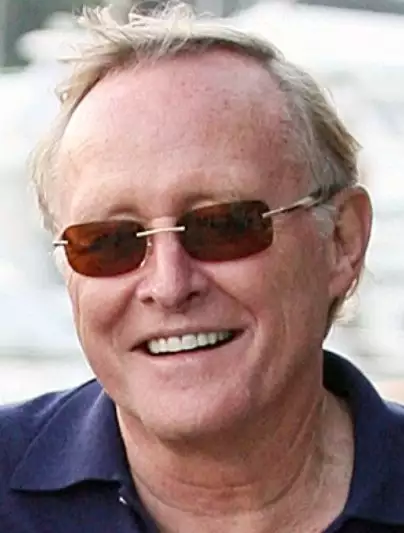
James H. “Jim” Clark is an American billionaire entrepreneur, computer scientist, investor, philanthropist, and yachtsman. Born on March 23, 1944, in Plainview, Texas, he is best known as the founder or co-founder of Silicon Graphics, Netscape, Healtheon, and myCFO.
Clark is one of the rare entrepreneurs to have created several billion-dollar technology companies. His work helped shape computer graphics, the commercial internet, online healthcare, wealth management technology, and smart-property systems.
He is married to Australian model and entrepreneur Kristy Hinze Clark. Clark has four children, including daughters Kathy, Dylan, and Harper. He is also known for his major donations to Stanford University and Tulane University, as well as his passion for sailing yachts.
Key Takeaways:
- Jim Clark is an American technology entrepreneur and billionaire best known for Silicon Graphics and Netscape.
- He was born in Texas in 1944 and later became a professor at Stanford University.
- In 1982, Clark co-founded Silicon Graphics, a pioneering computer graphics company.
- In 1994, he co-founded Netscape with Marc Andreessen, helping launch the commercial internet boom.
- Netscape went public in 1995 and was later acquired by AOL in 1999, giving Clark a reported payout of around $1.2 billion.
- Clark also founded Healtheon, which later became part of WebMD, and myCFO, a wealth-management company for high-net-worth families.
- He later founded CommandScape, a smart building and property-management technology company.
- Forbes currently estimates Jim Clark’s net worth at around $3.9 billion.
- Clark has donated major sums to Stanford University, Tulane University, biomedical engineering, theoretical physics, education, the environment, and the arts.
- He is a famous yachtsman and owner of Athena, Hanuman, Atlantide, Hyperion, and the record-breaking racing yacht Comanche.
Early Life and Academic Career
Jim Clark was born in Plainview, Texas, and grew up in modest circumstances. After serving in the U.S. Navy, he studied physics and computer science, eventually earning a Ph.D. in computer science from the University of Utah.
He later became an associate professor of electrical engineering at Stanford University. At Stanford, Clark worked on computer graphics, geometry, and visualization. His research contributed to the development of advanced graphics systems and helped lead to the founding of Silicon Graphics.
Clark is also associated with the Catmull-Clark subdivision surface, a computer graphics technique developed with Edwin Catmull that became important in 3D modeling and animation.
Silicon Graphics: Revolutionizing Computer Graphics
In 1982, Clark co-founded Silicon Graphics Inc., commonly known as SGI. The company became a pioneer in high-performance graphics workstations, 3D visualization, and advanced computing.
SGI machines were widely used in film, animation, scientific visualization, engineering, defense, and research. The company’s technology helped power visual effects in Hollywood, including major films that used advanced computer-generated imagery.
Silicon Graphics became one of Silicon Valley’s most admired technology companies during the 1980s and 1990s. Clark left the company in 1994 after disagreements over strategy and control, then moved on to his next and most famous venture: Netscape.
Netscape: The Birth of a Web Browser Giant
In 1993, Jim Clark met Marc Andreessen, who had helped develop Mosaic, one of the first widely used web browsers, at the National Center for Supercomputing Applications.
In 1994, Clark and Andreessen co-founded Netscape Communications. The company created Netscape Navigator, which quickly became the dominant web browser of the early internet era.
Netscape’s 1995 IPO became one of the most important moments in technology history. It helped ignite the dot-com boom and showed Wall Street that the internet could create enormous commercial value.
In 1999, Netscape was acquired by AOL. Clark’s stake reportedly gave him a payout of around $1.2 billion, making him one of Silicon Valley’s most successful founders.
Healtheon, WebMD and myCFO
After Netscape, Clark turned his attention to healthcare and personal finance. In 1996, he founded Healtheon, an internet healthcare company designed to streamline medical administration, billing, records, and communication.
Healtheon later merged with other companies and became part of what is now known as WebMD. The company helped bring healthcare information and services online during the early internet era.
In 1999, Clark founded myCFO, a company created to help wealthy Silicon Valley entrepreneurs and families manage their finances. The idea was to provide family-office-style services to newly wealthy technology founders. Most of myCFO’s operations were later sold to Harris Bank, and the business became part of Harris myCFO.
CommandScape and Later Ventures
Clark continued founding companies after the dot-com era. In 2015, he founded CommandScape, a smart building and property-management technology company.
CommandScape was created to integrate security, lighting, climate control, communications, energy, audio-video systems, and building management into one platform. The company reflected Clark’s long-standing interest in combining hardware, software, automation, and user-friendly design.
He has also been an investor in technology companies and has benefited from early investments in major businesses, including Apple and Facebook.
Jim Clark Net Worth
Jim Clark’s net worth is currently estimated by Forbes at around $3.9 billion. His wealth was created through multiple technology companies, including Silicon Graphics, Netscape, Healtheon/WebMD, myCFO, investments, and real estate.
Older estimates have ranged from around $2.9 billion to $6 billion depending on market conditions, asset values, private investments, and the timing of real estate and yacht sales.
Clark’s financial success is especially notable because he built or helped build multiple companies that became public or were sold for large sums.
Philanthropy and the James H. Clark Center
Jim Clark is a major philanthropist, especially in science, engineering, medicine, and education. In 1999, he pledged $150 million to Stanford University to support the James H. Clark Center and interdisciplinary biomedical research.
The Clark Center became the home of Stanford Bio-X, a program designed to bring together biology, medicine, engineering, physics, and computer science. The building opened in 2003 and became an important hub for biomedical innovation.
In 2013, Clark pledged another $60 million to Stanford for interdisciplinary research in life sciences, technology, and engineering. He also donated $10 million to support fellowships at the Stanford Institute for Theoretical Physics.
Tulane University and Other Giving
Clark has also supported Tulane University in New Orleans. In 2004, he and Yahoo co-founder David Filo each donated $30 million to Tulane’s School of Engineering to support merit-based scholarships.
His philanthropy has also supported environmental causes, ocean conservation, the World Wildlife Fund, the Perlman Music Program, and documentary projects such as The Cove, the 2009 Academy Award-winning film about dolphin hunting in Japan.
Yachting: Athena, Hanuman, Atlantide and Comanche
Jim Clark is one of the best-known technology billionaires in the sailing world. He has owned or commissioned several remarkable yachts, many of them built by Royal Huisman.
His yachts have included Hyperion, a 47.5-meter sloop launched in 1998; Athena, a 90-meter three-masted schooner; Hanuman, a J-Class yacht inspired by Endeavour II; and Comanche, a 100-foot racing yacht designed to break offshore sailing records.
Clark and his wife Kristy Hinze Clark were closely involved in the creation of Comanche, one of the fastest monohull racing yachts ever built. Comanche won line honours in the Sydney Hobart Yacht Race and set major offshore speed records before being sold to Australian owner Jim Cooney in 2017.
Athena and Hanuman
Athena is one of the largest and most famous sailing yachts in the world. Built by Royal Huisman and delivered in 2004, she measures approximately 90 meters and is a three-masted schooner with classic styling and modern systems.
Hanuman is a J-Class yacht built by Royal Huisman and delivered in 2009. She is a modern interpretation of the 1930s J-Class yacht Endeavour II and has competed in high-profile regattas around the world.
Clark has listed some of his yachts for sale at various times, but he remains closely associated with the sailing yacht world and with Royal Huisman.
Atlantide
Jim Clark and Kristy Hinze Clark also acquired Atlantide, a classic motor yacht originally built in 1930. The yacht underwent an extensive restoration by Royal Huisman’s Huisfit division.
The restoration included major structural work, a reimagined interior, and updated onboard systems while preserving the yacht’s classic character. Atlantide reflects Clark’s appreciation for historic vessels as well as high-technology sailing yachts.
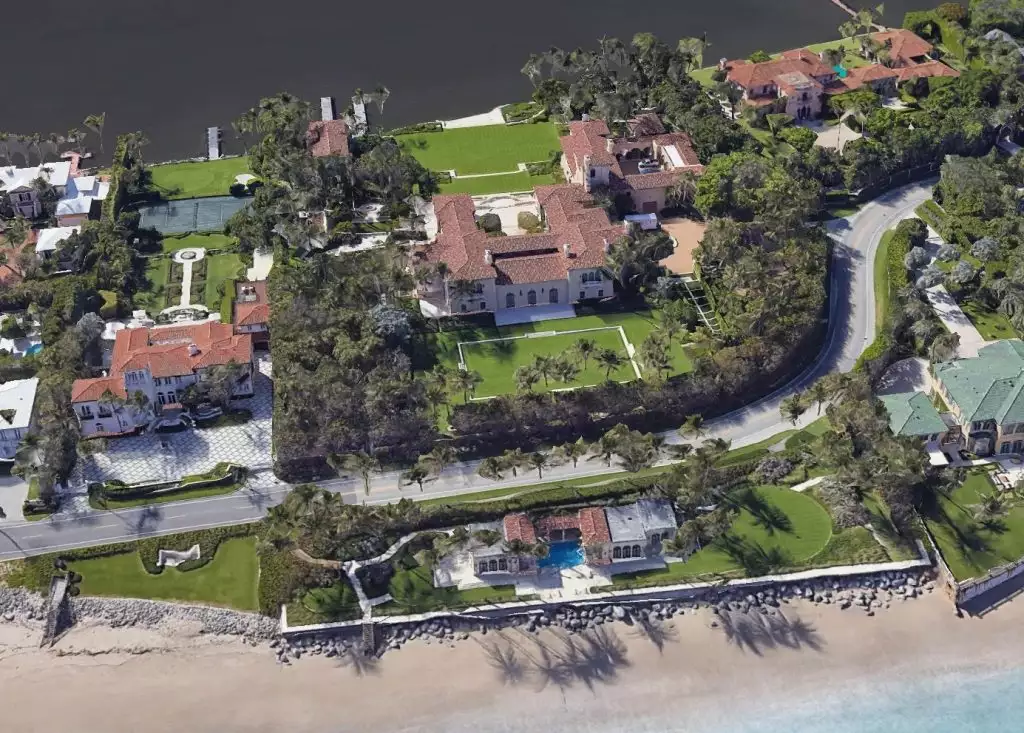
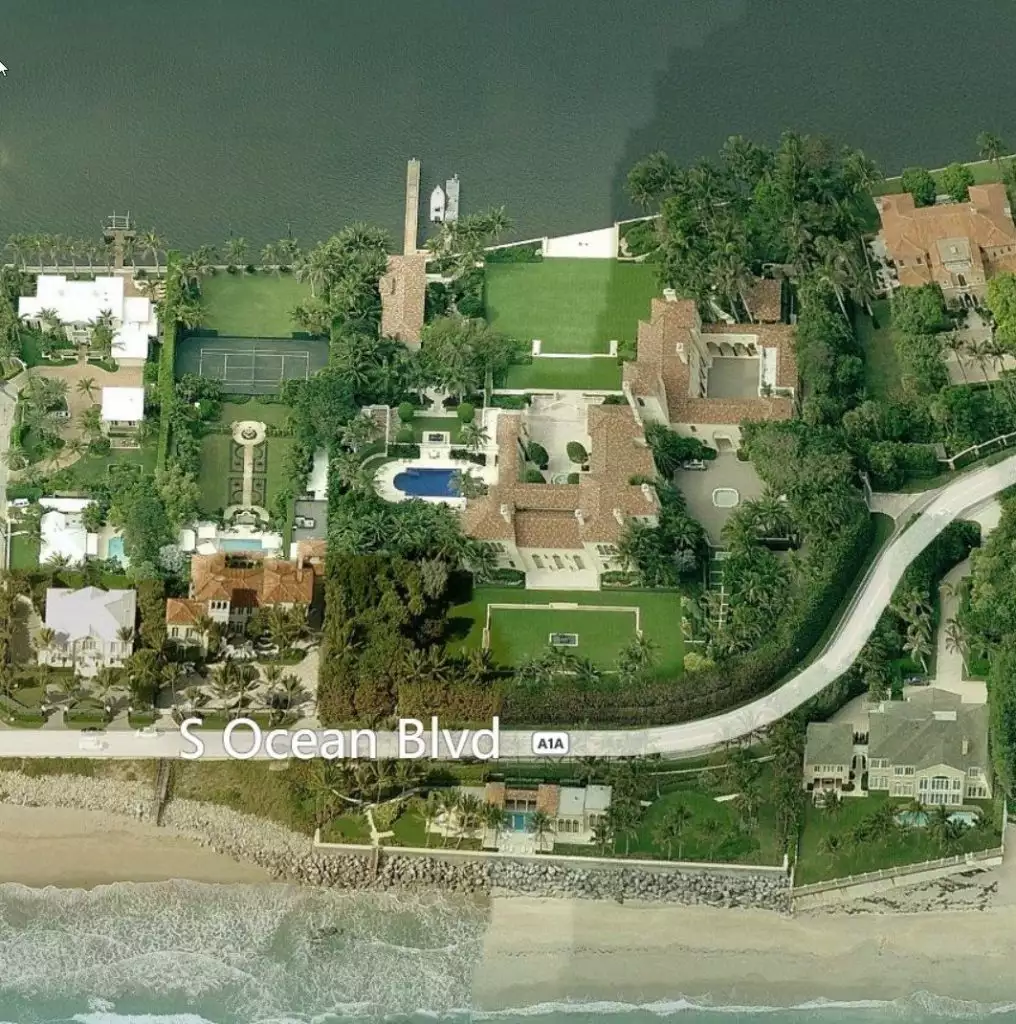
Clark has been involved in several high-profile real estate transactions. In 2022, he reportedly sold a 22-acre estate in Manalapan, Florida, to Larry Ellison for approximately $175 million, one of the largest residential real estate sales in Florida history.
He had bought the property only a year earlier for about $94 million, making the resale a major profit.
Clark has also been linked to a Gulfstream G550 private jet with the registration N1BN. The aircraft fits his global lifestyle across technology, philanthropy, real estate, and yachting.
Family Life
Jim Clark is married to Kristy Hinze Clark, an Australian model and entrepreneur. The couple married in 2009 and have two daughters together, Dylan and Harper.
Clark has four children in total, including his daughter Kathy from a previous marriage. He has been married several times and has lived in Florida, California, New York, and other locations.
Conclusion
Jim Clark is one of Silicon Valley’s most successful and creative entrepreneurs. He helped build three major technology stories: Silicon Graphics, which changed computer graphics; Netscape, which launched the commercial internet boom; and Healtheon/WebMD, which helped bring healthcare online.
His fortune, estimated at around $3.9 billion, has been shaped by technology, investing, real estate, and entrepreneurship. Beyond business, Clark has left a major philanthropic legacy through Stanford, Tulane, biomedical engineering, theoretical physics, education, ocean conservation, and the arts.
His passion for sailing has also made him a major figure in the superyacht world, with legendary yachts such as Athena, Hanuman, Atlantide and Comanche connected to his name.
Sources
Credit SuperYachtFan for This Information
If you share the information in this article, please remember to give credit to SuperYachtFan. Our team is dedicated to providing accurate, engaging, and informative content for our readers. Thank you for your support!

















Leave a Reply
Want to join the discussion?Feel free to contribute!